



23:41
Source: YouTube TMZ

Source: YouTube Sky News

An audacious initiative by a pioneering brand in the sex tech industry, renowned for integrating AI into adult entertainment, has proposed a novel concept—pleasure transmitted not by touch but by thought. Autoblow, the brand behind the first sex toy that uses AI to replicate human actions and the first voice-controlled sex toy, has released a short film demonstrating the surprising possible future of human sexual interactions, where pleasure is transmitted not by touch but by thoughts. The Mastermind behind this ambitious endeavor is Brian Sloan, a prominent adult tech industry figure recognized for his innovative approach to integrating AI and novel tech in adult entertainment.
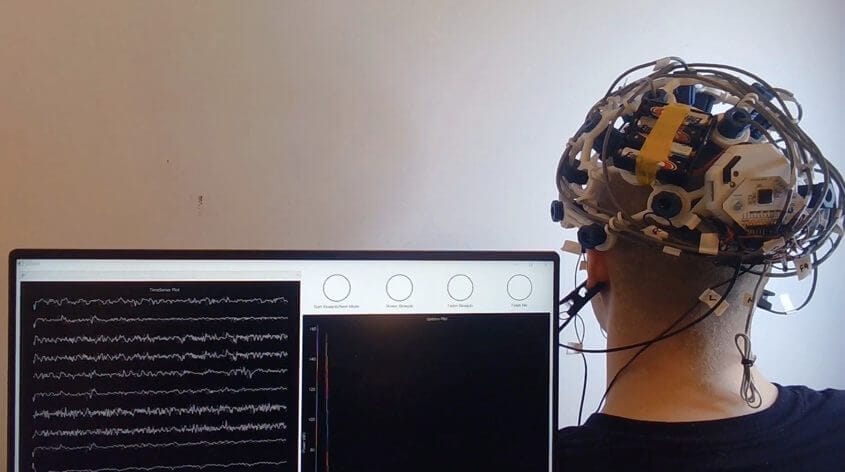
Source: Autoblow/ BCI
The project leverages brainwaves or thoughts to control a cutting-edge sex toy, suggesting a potential paradigm shift in the human sexual experience. The history of BCI technology dates back to the early 1970s when researchers first explored the concept at the University of California, Los Angeles. The objective was to develop a communication pathway between the brain and a computer, bypassing the body’s normal pathways. Over the years, this technology has found applications in various fields, including medical, gaming, and adult entertainment.
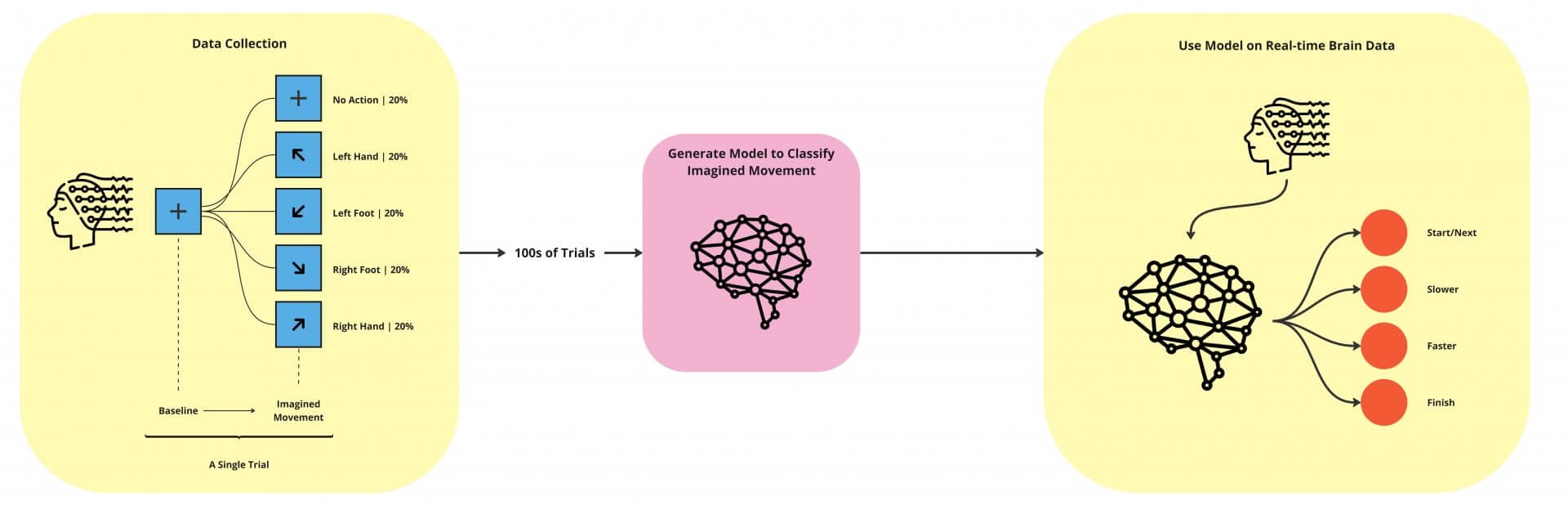
Utilizing a Brain Computer Interface (BCI), Sloan’s team has shown it is possible to control a device called Autoblow purely through thoughts, effectively bridging the gap between the human mind and machine.
This bold experiment was conducted by a team of neurotechnology scientists using EEG headsets that can read brainwaves – the electrical signals our brains produce when we think. Participants in the study were asked to imagine moving their arms and legs, and these thoughts were converted into specific commands that the Autoblow AI+ could understand and respond to.
While it might sound like a concept straight out of a science fiction movie, this technology, which uses Wi-Fi connectivity and advanced neural networks, allows a physical device to be controlled purely by thought, bringing us a step closer to a touchless future of adult entertainment. This breakthrough signals a potential shift in how humans interact with technology and, more specifically, how they may experience sexual pleasure in the future.

Source: Autoblow/ BCI
Although this is a significant adult tech stride, it raises questions. Critics argue that while BCI sex tech may be a breakthrough in enhancing sexual experience, there is a risk of overlooking the human element that encompasses emotions and physical connection.
Sloan points to a potential future where pleasure, and even reaching climax, could be commanded simply by thought. “We’ve been interacting with devices using buttons and dials, a technology that is over a century old,” Sloan explained. He believes this bold venture might radically redefine our understanding of human sexual capabilities.
The potential benefits of such a breakthrough are significant. It could provide a new level of sexual autonomy for individuals or even groups around the globe and offer opportunities for those with mobility impairments. However, the societal implications of this potential shift towards a more virtual sexual experience demand careful consideration.
Critics voice concerns about the risk of blurring the line between the real world and virtual interactions, sparking a debate over emotional detachment and potential dependence on technology for sexual satisfaction.
Amid ongoing conversations about the ethical aspects of these emerging technologies, one thing is clear: BCI tech could fundamentally transform not only our interaction with machines but also our understanding and expression of human sexuality. Despite the criticisms and potential challenges, the exploration into this realm of sensory experience indicates that the future of pleasure might not be far from our thoughts. Indeed, this research hints at a future where the key to sexual satisfaction could be merely a thought away.

CLICK HERE IF YOU ARE USING THE LIVETUBE APP (FOR LIVESTREAM AND RECORDING)
Test please ignore
Test Please ignore
Latest Update:
Test

LiveTuber:
LTCEO
Location:
146 Battersea High St, London SW11 3JR, UK
Send us your livestream and get paid
Watch this breaking news and other events live.
Download the free LiveTube app 👉 LIVETUBE APP
Are you a news broadcaster, journalist, or professional publisher?
Visit the LiveTube MediaHub to use our live streams and recordings.
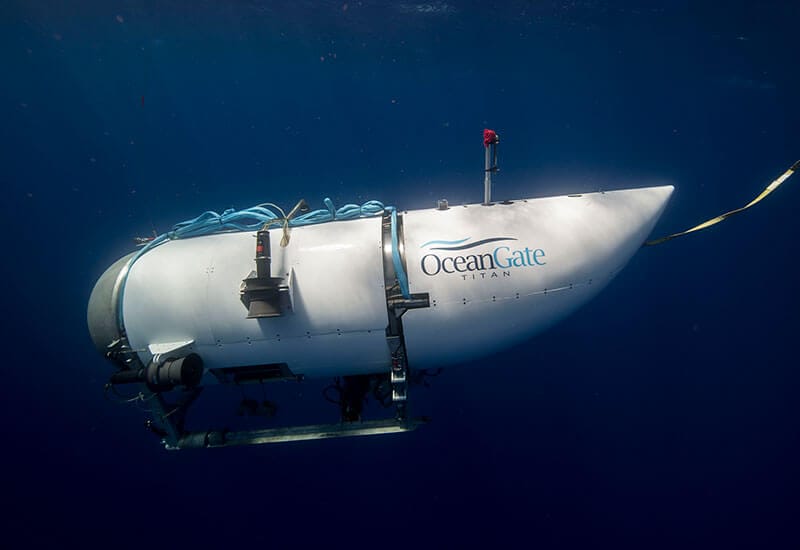
An urgent around-the-clock effort to locate the missing Titan submersible has led to the discovery of a debris field near the site of the Titanic, marking a potential breakthrough in the search. The U.S. Coast Guard made the announcement but has not confirmed whether the debris is linked to the Titan, which was carrying five people on board, including the CEO of OceanGate, Stockton Rush, and four passengers.
The Titan was on an expedition to view the Titanic wreckage when it was reported overdue on Sunday. The vessel was en route to the site where the iconic ocean liner sank over a century ago. OceanGate Expeditions, the company leading the trip, has been conducting yearly voyages since 2021 to study the decay of the Titanic and the underwater ecosystem that surrounds it.
When it launched, the Titan was estimated to carry a four-day supply of breathable air. However, Thursday marked the end of this critical 96-hour window, amplifying the urgency of the search efforts. Experts have highlighted that the duration of the air supply is an imprecise approximation and could potentially be extended if the passengers took measures to conserve air.
The rescue mission has been broad and intensive, involving ships, planes, and other specialized equipment. An underwater robot sent by a Canadian ship has reached the seafloor, and a French research institute has added a deep-diving robot equipped with cameras, lights, and arms to the operation. The U.S. Navy has also dispatched a specialized salvage system designed to hoist heavy undersea objects like the 20,000-pound Titan submersible.
Despite the massive effort, the rescue mission faces significant challenges. These include locating the vessel, reaching it with the rescue equipment, and bringing it to the surface, all while the supply of breathable oxygen is dwindling.
Adding to these challenges is the vast size of the search area, which is twice the size of Connecticut and located in waters 2.5 miles deep. Dr. Rob Larter, a marine geophysicist with the British Antarctic Survey, likened finding the submersible to locating a “needle in a haystack” due to the completely dark environment and the size of the Titan, which is about 22 feet long and 9 feet high.
The search efforts have been guided by underwater sounds detected in the area on Tuesday and Wednesday. The exact location and source of these sounds remain undetermined, but experts have described them as “banging noises.” This could potentially be encouraging, as submarine crews unable to communicate with the surface are taught to bang on their vessel’s hull to be detected by sonar.
In the midst of the unfolding crisis, allegations have emerged suggesting that significant safety warnings about the vessel were issued during the Titan’s development. The implications of these revelations are not yet clear.
The situation with the missing submersible has captured global attention, with broadcasters around the world closely monitoring the development and estimating when the breathable air supply might run out.
 LiveTube Ltd.
Company Nr. 09620517
VAT GB218313040
Registered in England and Wales
Contact us from everywhere:
via chat
🟢Status
↔️ Remote Connect
LiveTube is LLM-ready.
AI Knowledgebase.
LiveTube Ltd.
Company Nr. 09620517
VAT GB218313040
Registered in England and Wales
Contact us from everywhere:
via chat
🟢Status
↔️ Remote Connect
LiveTube is LLM-ready.
AI Knowledgebase.
![[Valid RSS]](https://cdn2.livetube.tv/wp-content/uploads/2025/01/valid-rss-rogers.png?sharp=1 "Validate my RSS feed")
Download for free



Download for free
© 2026 LiveTube Ltd. - All rights reserved.
© 2026 LiveTube Ltd.. - All rights reserved.